



- 06 Μαρ 2021, 09:42
#695710
Δεν λέει κάτι ο πίνακας, μιας και δεν κάνουν όλοι τα ίδια τεστ. Άρα η στήλη cases (κρούσματα) δηλαδή, είναι μη συγκρίσιμη.

- 06 Μαρ 2021, 10:58
#695717
Η Διακήρυξη Του Γκρέιτ Μπάρινγκτον
Ως επιδημιολόγοι μεταδοτικών ασθενειών και επιστήμονες της δημόσιας υγείας, εκφράζουμε τις σοβαρές μας ανησυχίες σχετικά με τις καταστροφικές επιπτώσεις στη σωματική και ψυχική υγεία από τις επικρατούσες πολιτικές για την αντιμετώπιση της COVID-19 και προτείνουμε μια προσέγγιση που αποκαλούμε Εστιασμένη Προστασία (Focused Protection).
Προερχόμενοι από την Αριστερά και τη Δεξιά, καθώς και από όλο τον κόσμο, έχουμε αφιερώσει την καριέρα μας στην προστασία των ανθρώπων. Οι τρέχουσες πολιτικές lockdown προκαλούν καταστροφικές επιπτώσεις στη βραχυπρόθεσμη και μακροπρόθεσμη δημόσια υγεία. Τα αποτελέσματα (για να αναφέρουμε μερικά μόνο) περιλαμβάνουν χαμηλότερα ποσοστά εμβολιασμού στην παιδική ηλικία, λιγότερους διαγνωστικούς ελέγχους για καρκίνο, επιδείνωση των καρδιαγγειακών παθήσεων αλλά και της ψυχικής υγείας – οδηγώντας σε αύξηση της θνησιμότητας παραπάνω από το αναμενόμενο μέσα στα επόμενα χρόνια, με την εργατική τάξη και τα νεότερα μέλη της κοινωνίας να επωμίζονται το μεγαλύτερο βάρος. Η παραμονή των μαθητών εκτός σχολείου είναι επίσης μια σοβαρή κοινωνική αδικία.
Η διατήρηση αυτών των μέτρων έως ότου είναι διαθέσιμο ένα εμβόλιο θα προκαλέσει ανεπανόρθωτη βλάβη, με τους μη προνομιούχους να πλήττονται δυσανάλογα.
Ευτυχώς η κατανόησή μας για τον ιό αυξάνεται. Γνωρίζουμε ότι η ευπάθεια στο θάνατο από την COVID-19 είναι περισσότερο από χίλιες φορές υψηλότερη στους ηλικιωμένους και σε ασθενείς σε σύγκριση με τους νέους. Επιπλέον, για τα παιδιά, ο COVID-19 είναι λιγότερο επικίνδυνος από πολλές άλλες νόσους ή επιβλαβείς καταστάσεις, ανάμεσα στις οποίες και η εποχιακή γρίπη.
Καθώς αυξάνεται η ανοσία στον γενικό πληθυσμό, ο κίνδυνος μόλυνσης σε όλους –συμπεριλαμβανομένων των ευάλωτων– μειώνεται. Γνωρίζουμε ότι όλοι οι πληθυσμοί θα φτάσουν τελικά στην «ανοσία αγέλης» –δηλαδή το σημείο εκείνο στο οποίο το ποσοστό των νέων λοιμώξεων θα είναι σταθερό– και ότι αυτό μπορεί να βοηθηθεί από (αλλά δεν εξαρτάται από) ένα εμβόλιο. Ο στόχος μας θα πρέπει επομένως να είναι η ελαχιστοποίηση της θνησιμότητας και της γενικότερης κοινωνικής βλάβης έως ότου φτάσουμε σε ένα τέτοιο επίπεδο ανοσίας.
Η πιο κοινωνικά ευαίσθητη προσέγγιση που εξισορροπεί τους κινδύνους και τα οφέλη από την επίτευξη της «ανοσίας αγέλης» είναι να επιτραπεί σε εκείνους που διατρέχουν τον ελάχιστο κίνδυνο θανάτου να ζήσουν τη ζωή τους κανονικά, για να αποκτήσουν ανοσία στον ιό μέσω φυσικής λοίμωξης, προστατεύοντας καλύτερα όσους διατρέχουν μεγαλύτερο κίνδυνο. Αυτό ονομάζουμε Εστιασμένη Προστασία (Focused Protection).
Η υιοθέτηση μέτρων για την προστασία των ευάλωτων θα πρέπει να είναι ο κεντρικός στόχος των πολιτικών προστασίας της δημόσιας υγείας από την COVID-19. Για παράδειγμα, τα γηροκομεία πρέπει να χρησιμοποιούν προσωπικό με επίκτητη ανοσία και να εκτελούν συχνές δοκιμές για το υπόλοιπο προσωπικό και όλους τους επισκέπτες. Η εναλλαγή προσωπικού πρέπει να ελαχιστοποιηθεί. Οι συνταξιούχοι που ζουν στο σπίτι πρέπει να παραλαμβάνουν τα είδη παντοπωλείου και άλλα είδη πρώτης ανάγκης με παράδοση κατ’ οίκον. Όταν είναι δυνατό, θα πρέπει να μπορούν να συναντούν μέλη της οικογένειάς τους σε εξωτερικούς χώρους. Ένας ολοκληρωμένος και λεπτομερής κατάλογος τέτοιων μέτρων, που να περιλαμβάνει μεταξύ άλλων και προσεγγίσεις για τα νοικοκυριά πολλαπλών γενεών, μπορεί να εφαρμοστεί και εμπίπτει στο πεδίο εφαρμογής και στις δεξιότητες τεχνογνωσίας των επαγγελματιών της δημόσιας υγείας.
Εκείνοι που δεν είναι ευάλωτοι θα πρέπει αμέσως να έχουν τη δυνατότητα να ξαναρχίσουν τη ζωή τους ως συνήθως. Απλά μέτρα υγιεινής, όπως το πλύσιμο των χεριών και η παραμονή στο σπίτι όταν κανείς είναι άρρωστος, πρέπει να υιοθετούνται από όλους για τη μείωση του ορίου επίτευξης της «ανοσίας αγέλης» στον γενικό πληθυσμό. Τα σχολεία και τα πανεπιστήμια πρέπει να είναι ανοιχτά για διά ζώσης διδασκαλία. Οι εξωσχολικές δραστηριότητες, όπως τα αθλήματα, πρέπει να συνεχιστούν. Οι νεαροί ενήλικες χαμηλού κινδύνου πρέπει να εργάζονται κανονικά και όχι από το σπίτι. Τα εστιατόρια και οι άλλες επιχειρήσεις πρέπει να ανοίξουν. Οι τέχνες, η μουσική, ο αθλητισμός και άλλες πολιτιστικές δραστηριότητες πρέπει να ξαναρχίσουν. Άτομα που διατρέχουν μεγαλύτερο κίνδυνο μπορούν να συμμετάσχουν εάν το επιθυμούν, ενώ η κοινωνία στο σύνολό της θα απολαμβάνει την προστασία που παρέχεται στους ευάλωτους από εκείνους που θα έχουν αναπτύξει ανοσία.
On October 4, 2020, this declaration was authored and signed in Great Barrington, United States, by:
Dr. Martin Kulldorff, professor of medicine at Harvard University, a biostatistician, and epidemiologist with expertise in detecting and monitoring infectious disease outbreaks and vaccine safety evaluations.
Dr. Sunetra Gupta, professor at Oxford University, an epidemiologist with expertise in immunology, vaccine development, and mathematical modeling of infectious diseases.
Dr. Jay Bhattacharya, professor at Stanford University Medical School, a physician, epidemiologist, health economist, and public health policy expert focusing on infectious diseases and vulnerable populations.
Co-signers
Medical and Public Health Scientists and Medical Practitioners
Dr. Alexander Walker, principal at World Health Information Science Consultants, former Chair of Epidemiology, Harvard TH Chan School of Public Health, USA
Dr. Andrius Kavaliunas, epidemiologist and assistant professor at Karolinska Institute, Sweden
Dr. Angus Dalgleish, oncologist, infectious disease expert and professor, St. George’s Hospital Medical School, University of London, England
Dr. Anthony J Brookes, professor of genetics, University of Leicester, England
Dr. Annie Janvier, professor of pediatrics and clinical ethics, Université de Montréal and Sainte-Justine University Medical Centre, Canada
Dr. Ariel Munitz, professor of clinical microbiology and immunology, Tel Aviv University, Israel
Dr. Boris Kotchoubey, Institute for Medical Psychology, University of Tübingen, Germany
Dr. Cody Meissner, professor of pediatrics, expert on vaccine development, efficacy, and safety. Tufts University School of Medicine, USA
Dr. David Katz, physician and president, True Health Initiative, and founder of the Yale University Prevention Research Center, USA
Dr. David Livermore, microbiologist, infectious disease epidemiologist and professor, University of East Anglia, England
Dr. Eitan Friedman, professor of medicine, Tel-Aviv University, Israel
Dr. Ellen Townsend, professor of psychology, head of the Self-Harm Research Group, University of Nottingham, England
Dr. Eyal Shahar, physician, epidemiologist and professor (emeritus) of public health, University of Arizona, USA
Dr. Florian Limbourg, physician and hypertension researcher, professor at Hannover Medical School, Germany
Dr. Gabriela Gomes, mathematician studying infectious disease epidemiology, professor, University of Strathclyde, Scotland
Dr. Gerhard Krönke, physician and professor of translational immunology, University of Erlangen-Nuremberg, Germany
Dr. Gesine Weckmann, professor of health education and prevention, Europäische Fachhochschule, Rostock, Germany
Dr. Günter Kampf, associate professor, Institute for Hygiene and Environmental Medicine, Greifswald University, Germany
Dr. Helen Colhoun, professor of medical informatics and epidemiology, and public health physician, University of Edinburgh, Scotland
Dr. Jonas Ludvigsson, pediatrician, epidemiologist and professor at Karolinska Institute and senior physician at Örebro University Hospital, Sweden
Dr. Karol Sikora, physician, oncologist, and professor of medicine at the University of Buckingham, England
Dr. Laura Lazzeroni, professor of psychiatry and behavioral sciences and of biomedical data science, Stanford University Medical School, USA
Dr. Lisa White, professor of modelling and epidemiology, Oxford University, England
Dr. Mario Recker, malaria researcher and associate professor, University of Exeter, England
Dr. Matthew Ratcliffe, professor of philosophy, specializing in philosophy of mental health, University of York, England
Dr. Matthew Strauss, critical care physician and assistant professor of medicine, Queen’s University, Canada
Dr. Michael Jackson, research fellow, School of Biological Sciences, University of Canterbury, New Zealand
Dr. Michael Levitt, biophysicist and professor of structural biology, Stanford University, USA.
Recipient of the 2013 Nobel Prize in Chemistry.
Dr. Mike Hulme, professor of human geography, University of Cambridge, England
Dr. Motti Gerlic, professor of clinical microbiology and immunology, Tel Aviv University, Israel
Dr. Partha P. Majumder, professor and founder of the National Institute of Biomedical Genomics, Kalyani, India
Dr. Paul McKeigue, physician, disease modeler and professor of epidemiology and public health, University of Edinburgh, Scotland
Dr. Rajiv Bhatia, physician, epidemiologist and public policy expert at the Veterans Administration, USA
Dr. Rodney Sturdivant, infectious disease scientist and associate professor of biostatistics, Baylor University, USA
Dr. Salmaan Keshavjee, professor of Global Health and Social Medicine at Harvard Medical School, USA
Dr. Simon Thornley, epidemiologist and biostatistician, University of Auckland, New Zealand
Dr. Simon Wood, biostatistician and professor, University of Edinburgh, Scotland
Dr. Stephen Bremner,professor of medical statistics, University of Sussex, England
Dr. Sylvia Fogel, autism provider and psychiatrist at Massachusetts General Hospital and instructor at Harvard Medical School, USA
Tom Nicholson, Associate in Research, Duke Center for International Development, Sanford School of Public Policy, Duke University, USA
Dr. Udi Qimron, professor of clinical microbiology and immunology, Tel Aviv University, Israel
Dr. Ulrike Kämmerer, professor and expert in virology, immunology and cell biology, University of Würzburg, Germany
Dr. Uri Gavish, biomedical consultant, Israel
Dr. Yaz Gulnur Muradoglu, professor of finance, director of the Behavioural Finance Working Group, Queen Mary University of London, England
https://gbdeclaration.org/great-barring ... ion-greek/
- 06 Μαρ 2021, 11:04
#695718
FREQUENTLY ASKED QUESTIONS
lockdowns and collateral damage
How do you define lockdowns?
Lockdowns consist of a variety of measures, such as schools and universities that are closed for in-person teaching, hybrid schools, closed or partially closed restaurants and other businesses, restrictions on sports and cultural events, extraordinary travel restrictions, work-from-home orders, cancelled medical and dental visits, curfews, quarantine regulations, etc.
Do lockdowns have a successful history against infectious diseases?
Basic epidemiological theory indicates that lockdowns do not reduce the total number of cases in the long run and have never in history led to the eradication of a disease. At best, lockdowns delay the increase of cases for a finite period and at great cost.
Are governments still using lockdowns?
At the end of 2020, governments around the world, including many states in the US, continue to restrict normal activities, and some are introducing additional lockdown restrictions. Many schools remain closed to regular in-person teaching, while many businesses, concert halls, and churches are closed or only permitted to operate at partial capacity. Lockdown remains a primary tool used by many governments to address the pandemic.
What are the physical health impacts of lockdowns?
There are many physical health harms from lockdowns. Medical care visits have plummeted, with people avoiding needed medical care. This includes lower childhood vaccination rates, less cancer screening, skipped cancer treatments, fewer preventive cardiovascular disease visits, just to name a few. Many of the consequences of these missed visits will not show up in the mortality statistics for this year, but is something that we will have to live – and die – with for a long time.
What are the mental health impacts of lockdowns?
Humans have many needs, including a need for community and for normal social interactions with one another. Mental health has deteriorated due to lockdowns and the fear caused by public health messaging. For example, in Massachusetts, emergency departments have seen about four times more children and teens in psychiatric crisis than usual. One in four young adults in the US seriously considered suicide this past June. Extending the lockdown over an indefinite period of time will multiply these harms.
What are the harms from closing schools to in-person instruction?
All children have a right to a high-quality education. Adults have a moral obligation to make this happen, and it is morally wrong to ask children to bear a disproportionate burden of the costs of the epidemic. Yet the lockdown policy, and especially school closures, guarantees that children are especially harmed.
Online learning is not a good substitute for in-person teaching. For normal development, children have a strong need to socialize with other children, to make friends, and to play with one another. Schools are also the main point of contact with care systems and provide a refuge for disadvantaged children. Furthermore, the risk from dying from becoming infected by COVID-19 is for children is very low – lower than the risk of dying from the seasonal flu. Schools do not close due to influenza, and neither should they close because of COVID-19.
How do lockdowns specifically harm the working class?
Lockdowns especially harm the working class. As essential workers, or just to survive, they must work and be exposed to COVID even if they are at high-risk, building the population immunity that will eventually protect everyone. This, while low-risk college students and young professional lawyers, bankers, journalists and scientists are protected by working from home. Less wealthy people also lack a financial safety net, and food shortages and house evictions lead to excess deaths. Working class children are also disproportionately harmed by school closings, as their parents are less likely to afford tutors, pod schools or private schools. Poorer people also have less access to high quality medical care services, when they become ill, with lockdowns tending to decrease health care access differentially more for the poor. Thus, lockdowns both cause excess overall mortality and increase societal inequality.
How do lockdowns harm the developing world?
The lockdowns are causing devastating harm to both mental and physical health worldwide. A UN reportestimates that an additional 80 to 130 million poor people will suffer from hunger. Of these, it is estimated that lockdown restrictions have led to 10,000 children starving to death each month. Moreover, an additional 400,000 people will may die from inadequate tuberculosis treatment as a consequence of the COVID-19 strategies. Vaccination campaigns in poor countries that address diseases like measles and polio have been suspended due to the lockdowns, with devastating measles outbreaks as a result. The list could be extended endlessly, with both short- and long-term consequences.
covid-19 risk
How Dangerous is the SARS-CoV-2 virus and the COVID-19 disease?
It is important to distinguish between the risk of infection and the risk of death. Anyone can get infected, but there is more than a thousand-fold difference in the risk of death between the oldest and youngest. For old people, COVID-19 is more dangerous than the annual influenza. For children, the COVID-19 mortality risk is less than for the annual influenza.
With schools closed, how can you say that the mortality risk to children is low?
To scientifically answer that question, we must look at the only major western country that did not close schools during the height of the pandemic. That is Sweden, who kept day-care and schools open for children ages 1 to 15. Among its 1.8 million children in this age range, there were exactly zero deaths from COVID-19 during this time-period, and only a handful of hospitalizations. During this time, symptomatic children were told to stay home, or sent home if they came to school, but there were no masks used or physical distancing at school.
Why are so many people afraid of COVID-19?
Unfortunately, the public health messaging about COVID-19 around the world has created many misperceptions that have spread fear. While older people underestimate their risk of COVID-19 mortality, young people greatly overestimate their mortality risk. Better public health messaging that does not spread unfounded fears based on anecdotes would help correct this situation.
protecting the old and other high-risk groups
How can one separate younger and older generations to ensure that the latter are not infected by the former?
It is not possible to do 100%, but, just as the strategies to date have managed to “successfully” shift infection risk from the professional class to the working class it is also possible to shift infection risk from high-risk older adults to low-risk younger adults. The latter will result in fewer deaths overall.
Don’t the current age-wide lockdown strategies properly protect the old?
No, on the contrary. There have been many unnecessary deaths, and especially among the urban working class. Current lockdown policies have failed to protect the vulnerable. Concrete examples of these failures include:
Requiring older “essential” workers and members of the working class that cannot afford not to work to be put in work situations where they may be exposed to the virus.
Failure to protect nursing home residents from exposure to the virus from staff members, visitors, and other residents.
No provision for elderly people living in multi-generational homes to be shielded should a family member be exposed to the virus.
How do we protect the elderly in nursing homes and other care settings?
A focused protection strategy would include frequent testing of nursing home staff members that are not already immune, testing of visitors, and less staff rotation so that residents only interact with a limited number of staff people. COVID-19 infected individuals should not be sent to nursing homes, and all new residents should be tested. Sequestering of care home residents who have COVID-19 is also important. (Note: Originally the Declaration specified “PCR testing”, but we have changed that to “testing”, as there are other tests available.)
How do we protect older people living at home?
During high transmission times, older people should be offered home delivery of groceries and other essentials. When seeing friends and relatives, it is best to do it outdoors. Testing should be available for relatives and friends who want to visit. Free N95 masks should be provided for when they cannot avoid potential exposure.
How do we protect older people still in the work force?
People in their 60s are at somewhat high risk, and many are still in the workforce. Those that can work from home should be allowed to do so. For example, teachers in their 60s could teach online courses, or help fellow teachers with grading exams, essays and homework. Those that cannot work from home should be funded to take a 3 to 6-month sabbatical. In addition, workplace disability laws should require employers to provide reasonable accommodations to protect high COVID19 risk workers without losing their jobs.
How do we protect older people in multigenerational homes?
University closures and the economic displacement caused by lockdowns has led millions of young adults to live with older parents, increasing regular close interactions across generations. We know that older people living with working-age adults have higher COVID-19 risk than older people living with other older people. There is no further excess risk if also living with children though. This is the toughest challenge, and family specific solutions must be found. If the working-age household members can work from home, they can isolate together. If that is not possible, the older family member might temporarily be able to live with an older friend or sibling, with whom they can self-isolate together during the height of community transmission. As a last resort, empty hotel rooms could be used for temporary housing.
How about younger people with risk factors?
People with comorbidity risk factors should take the same precautions as somewhat older people without those risk factors.
For how long must high-risk individuals be careful and/or self-isolate?
When herd immunity is reached, they can live normally again with minimal risks. How long that takes depends on the strategy used. If age-wide lockdown measures are used to try and suppress the disease, it could take a year or two or three, making it very difficult for older people to protect themselves for that long. If focused protection is used, it will likely only take 3 to 6 months.
How can older people know when to be extra careful?
It is essential for public health departments to monitor disease transmission at the local level and continuously communicate this to the public. High-risk individuals can make decisions and take precautions accordingly. This should ideally be done using random population surveys. Information on hospitalizations and mortality should also be tracked. Any monitoring system based on positive test results must account for geographical and temporal variation in testing practices. This type of COVID-19 monitoring is performed in, e.g., New York City.
This information should be conveyed to the population in a nuanced way that does not induce panic but instead provides the basis for an accurate assessment of each person’s risk based on their age and comorbid conditions. The goal should be that vulnerable people do not underestimate their risk from COVID-19 infection, and less vulnerable people do not overestimate their risk. Concrete recommendations should accompany the information – including perhaps recommendations to avoid crowds, hand washing, social distancing, and masks when their application to the situation is backed by sound science – that different people might take to reduce their infection risk.
herd immunity
What is herd immunity?
Herd immunity occurs when enough people have immunity so that most infected people cannot find new uninfected people to infect, leading to the end of the epidemic/pandemic. This means that the epidemic/pandemic will end before everyone is infected, although it will continue in endemic form with low rates of infections.
Do you believe in herd immunity?
Yes. Herd immunity is a scientifically proven phenomenon. To ask an epidemiologist if they believe in herd immunity is like asking a physicist if they believe in gravity. Those who deny herd immunity may also wish to join the flat-earth society.
With COVID-19, can herd immunity be avoided?
No. Sooner or later, herd immunity will be reached either through natural infection or through a combination of vaccinations and natural infection.
Is the Great Barrington Declaration advocating a ‘herd immunity strategy’?
No. Those making such claims in the media have either (i) not read the document, (ii) do not understand the basic principles of infectious disease epidemiology, or (iii) are willfully distorting the public health message for political purposes. For COVID-19, all strategies lead to herd immunity, making it nonsensical to denote one specific approach as a herd immunity strategy just as it does not make sense for airplane pilots to talk about a “gravity strategy” for safely landing a plane. The Declaration advocates a strategy that minimizes mortality until herd immunity is reached. That is done by minimizing the number of older high-risk people in the group that get infected while maximizing them among those that are still uninfected when herd immunity arrives.
Does the Great Barrington Declaration advocate for “Letting the virus run free”?
No, that is a false characterization, as it advocates the opposite. The central tenet of the declaration is Focused Protection, where older people and other high-risk groups are better protected than they have been, to ensure that they are not exposed to the virus. Neither does it encourage intentionally exposing anyone to the virus. Letting children and young adults live their lives without lockdown restrictions does not mean that we are letting them die from the virus, just like we do not accuse politicians for letting people die in car accidents when a new road is built. On the contrary, the GBD reduces the considerable collateral damage for less vulnerable people who face more danger from lockdown than they do from COVID-19 infection.
For COVID-19, what percent of the population needs to be immune to have herd immunity?
That is impossible to know right now. No respectable epidemiologist will mention a specific percentage needed. It also varies by geography, with a higher percentage needed in urban versus rural areas. It also depends on the strategy used. If people with more contacts are immune, such as traveling salesmen, cab drivers, politicians or party goers, then the percentage is lower.
What are the current levels of immunity against COVID-19? Is it enough for herd immunity?
The current levels of immunity vary by location. We know that is more prevalent than the percentage of the population that has antibodies, but we do not know how much more. The time course of the epidemic in several regions of the world indicate that immunity in the population is playing a substantial role in controlling the spread.
Should people deliberately get infected to generate herd immunity?
No.
Antibodies fade after COVID-19 infection. Does that mean natural immunity fades? How strong will vaccine induced immunity be?
That the antibody response fades over time after COVID infections was already known from a large body of literature.
However, it is also true that antibody response is not the only response our immune systems have in response to infection, and these other immune responses (e.g. the production of specific T-cells) appears to be quite long lasting. You can see this in the fact that that despite an estimated 750 million worldwide to date after 10 months living with the virus, we have seen only a handful of reinfections. If the virus is like other corona viruses in its immune response, recovery from infection will provide lasting protection against reinfection, either complete immunity or protection that makes a severe reinfection less likely.
Vaccine immune responses tend to less strong than natural immune response, but there are exceptions to that rule. Even after a vaccine is approved for use, we will have to wait a long while (probably at least ten months and longer) to see how long lasting and complete the immunity provided by the COVID-19 vaccines will be. Focused protection is the right way to manage the epidemic while we wait for the vaccine and after.
standard public health practice
Isn’t Focused Protection too risky an experiment?
No. Focused protection is based on the risk-based strategies outlined in the many pandemic preparedness plans that different countries had developed during the past decades. Surprisingly, except for Sweden, all countries threw their pandemic plans out the window when this pandemic started.
How were prior pandemics dealt with?
The focused protection strategy proposed by the Great Barrington declaration is indeed the standard way that societies have dealt with prior epidemics. Letting people who face very little risk from viral infection (but would suffer from the lockdowns) live their lives normally while taking precautions when they interact with more vulnerable people makes intuitive sense – they are harmed by the lockdowns and lifting the restrictions helps them. At the same time, better focused protection for the vulnerable is a moral necessity. Over time, population immunity will build up among the non-vulnerable until the vulnerable will no longer be at high risk of COVID-19 when engaging in normal activities.
Have contact tracing, testing and isolation been successful against infectious diseases?
Yes. Contact tracing is of critical importance for many infectious diseases. They do not work for widely spread diseases such as annual influenza, pre-vaccine measles, COVID-19, or, by definition, against any pandemic.
Is it not better to pursue a ZeroCOVID strategy like New Zealand and South Korea?
In New Zealand and South Korea, who locked down soon after the virus arrived, a zero-COVID strategy is feasible in the short run through a combination of lockdowns and national quarantine. Since the world is connected, countries that have successfully achieved a zero-COVID goal will need to disconnect themselves from physical exposure – through international travel limitations and required quarantining – for an indefinite period of time. A key decision for them is whether to wait for a vaccine, that will arrive somewhere between 2 months from now and never, or open the country, at which time the infection will return. Since they have few domestic cases, they are dependent on other countries to develop and evaluate the efficacy of the vaccines they need.
Most countries never had that option, with the virus already being too widespread to achieve a temporary national eradication. Pursuing a zero-COVID policy through lockdowns is then futile, leading to collateral damage with devastating effects on the health of millions around the world.
What is the role of vaccines in focused protection?
If wisely used, COVID-19 vaccines are an important additional tool for focused protection. The key is to vaccinate older high-risk people as well as their care givers, such as hospital and nursing home staff. Those who have already had COVID-19 do not need to be vaccinated.
https://gbdeclaration.org/frequently-asked-questions/
- 06 Μαρ 2021, 16:54
#695766
A brief tutorial in health education to show you how sound health education models have been used for manipulation instead of creating health awareness during the COVID 19 pandemic. We'll uses masks as an example of a health behavior.
https://threadreaderapp.com/thread/1368 ... vgTHjhttbs
https://threadreaderapp.com/thread/1368 ... vgTHjhttbs


- 06 Μαρ 2021, 17:21
#695770
Στο μπαμπάκι το κρυβανε το φαρμάκι οι ατιμ οι κερατάδς;
"I've seen things you people wouldn't believe; Attack ships on fire, off the shoulder of Orion. I watched C-beams glitter in the darkness at Tannhauser gate. All those moments will be lost, in time. Like.. Tears... In rain"

- 06 Μαρ 2021, 18:31
#695779
Δεν ξέρω αν υπάρχει ιός, βαμβάκι πάντως δεν υπάρχει στην μπατονετα που σου χώνουν.
- 06 Μαρ 2021, 20:01
#695787
"Εις το μέγα όνομα της Αγίας Τριαδας!!!!!!"
Μα τι πίνουν ρεεεεεεεε
Κλαίω από τα γελια
< >
Μα τι πίνουν ρεεεεεεεε
Κλαίω από τα γελια
< >


- 06 Μαρ 2021, 20:16
#695790
Έλεος, έχεις καταντήσει σαν τις Μανούλες του facebook με τις συνωμοσιολογικές ανοησίες που αλιεύεις και σερβίρεις εδώ μέσα. Και δεν είναι καν φρέσκιες πανάθεμα με, το συγκεκριμένο είναι από τον Οκτώβριο. Πρόκειται για στοχευμένη ψευδοεπιστημονική προπαγάνδα που έχει αναλυθεί και διαψευστεί πλήρως.
Τις προάλλες παρέθεσες κάτι ανάλογο από το Globalresearch. Πραγματικά σαν τις Μανούλες του facebook, απλά ψάχνεις δεξιά και αριστερά για validation, για κάτι που θα ενισχύσει τις προκαταλήψεις σου. Απλά κρίμα.
Giuseppe Busso έγραψε:Η Διακήρυξη Του Γκρέιτ Μπάρινγκτον
Έλεος, έχεις καταντήσει σαν τις Μανούλες του facebook με τις συνωμοσιολογικές ανοησίες που αλιεύεις και σερβίρεις εδώ μέσα.
Και δεν είναι καν φρέσκιες πανάθεμα με, το συγκεκριμένο είναι από τον Οκτώβριο. Πρόκειται για στοχευμένη ψευδοεπιστημονική προπαγάνδα που έχει αναλυθεί και διαψευστεί πλήρως. Τις προάλλες παρέθεσες κάτι ανάλογο από το Globalresearch. Πραγματικά σαν τις Μανούλες του facebook, απλά ψάχνεις δεξιά και αριστερά για validation, για κάτι που θα ενισχύσει τις προκαταλήψεις σου. Απλά κρίμα.
Tό τοι νομισθὲν τῆς ἀληθείας κρατεῖ.

- 06 Μαρ 2021, 21:48
#695794
Δυστυχώς +1...
Σαν JBT της αντίπερα όχθης.
Χαλάρωσε λίγο Busso. Είναι χάλια η κατάσταση αλλά δε χρειάζεται αυτό.
Σαν JBT της αντίπερα όχθης.
Χαλάρωσε λίγο Busso. Είναι χάλια η κατάσταση αλλά δε χρειάζεται αυτό.
We are constantly hounded by the politically correct assholes...
Amen and a-women!
Amen and a-women!


- 07 Μαρ 2021, 19:36
#695882
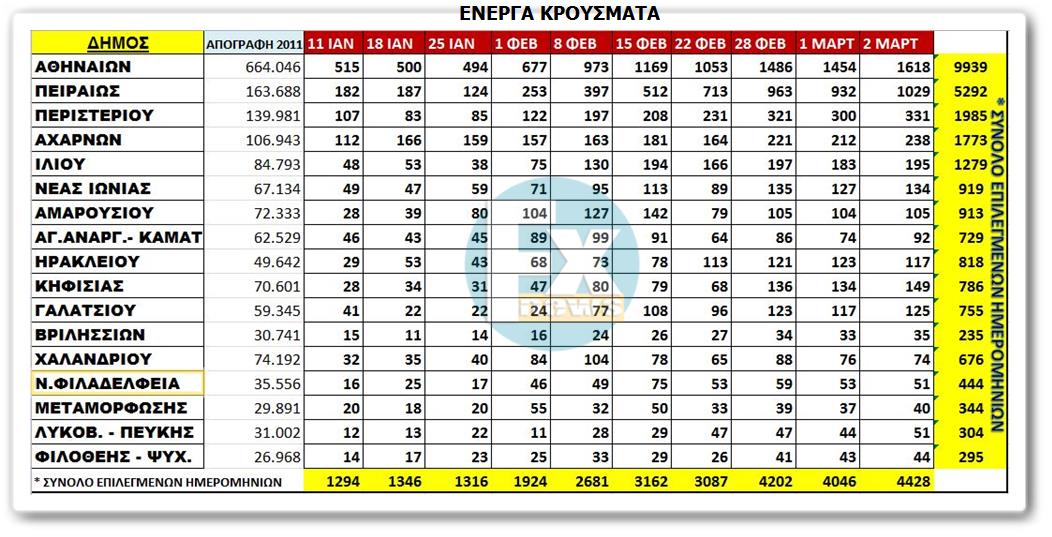
Δεν καταλαβαίνω γιατί τα προσθέτουν στην δεξιά στήλη, τι εξυπηρετεί ο αριθμός?
mousatos έγραψε:
Πειραιάς πάει για πρωτάθλημα
Δεν καταλαβαίνω γιατί τα προσθέτουν στην δεξιά στήλη, τι εξυπηρετεί ο αριθμός?