
Για θέματα γενικού ενδιαφέροντος, εκτός μηχανοκίνητων...
Άβαταρ μέλους
By Anonymous Founder
#645458 Κομισιόν: Πρωταθλήτρια ύφεσης η Ελλάδα με 9,7%
Πολύ χειρότερο και από το «κακό» σενάριο του υπ. Οικονομικών αυτό που περιλαμβάνουν οι εαρινές προβλέψεις της Κομισιόν. Στο 6,9% υπολογίζει τα δημοσιονομικά μέτρα στήριξης. Ελλειμμα στο 6,25% και εκτόξευση χρέους στο 196% του ΑΕΠ. Ανάκαμψη 7,9% το 2021.
https://www.euro2day.gr/news/economy/ar ... me-97.html
Η Ελλάδα θα είναι η χώρα που θα χτυπηθεί περισσότερο από την πανδημία, εκτιμά η Κομισιόν στις Εαρινές Προβλέψεις. Είναι χαρακτηριστικό ότι σύμφωνα με τις εκτιμήσεις των Βρυξελλών, η χώρα μας θα αντιμετωπίσει ύφεση 9,7%, που είναι το υψηλότερο ποσοστό μεταξύ των κρατών-μελών: πάνω από την Ιταλία (9,5%) αλλά και την Ισπανία (9,4%).

Υπερβαίνει δε και το αρνητικό σενάριο του υπουργείου Οικονομικών (7,9%) που κατέθεσε πρόσφατα η κυβέρνηση στις Βρυξέλλες. Πόσο μάλλον το βασικό σενάριο του ΥΠΟΙΚ, που μιλά για ύφεση 4,7%...


Σύμφωνα με την έκθεση, η οικονομία της Ελλάδας αναμένεται να δεχθεί σοβαρό πλήγμα το 2020 από την πανδημία του κορωνοϊού και τα αντίμετρα που ελήφθησαν για να περιοριστεί η εξάπλωσή του, γράφει στις εαρινές της προβλέψεις η Κομισιόν. Όπως τονίζει, η επίπτωση της κρίσης αναμένεται να είναι μεγάλη λόγω της σημασίας του τομέα φιλοξενίας στην Ελλάδα και του υψηλού μεριδίου των μικρών επιχειρήσεων, που είναι ιδιαίτερα ευάλωτες. Παρά την ταχεία πολιτική αντίδραση, η ισχυρή συρρίκνωση της παραγωγής προβλέπεται πως θα έχει επιπτώσεις στην απασχόληση, γράφει η Κομισιόν, συμπληρώνοντας ωστόσο πως την κρίση αναμένεται να ακολουθήσει ανάκαμψη το 2021. Η ύφεση και το κόστος των δημοσιονομικών μέτρων για να αντιμετωπιστεί η κρίση θα οδηγήσουν σε ευμέγεθες έλλειμμα το 2020, σημειώνει η Κομισιόν.

:help: :help: :help: :help: :help: :help:
Το άρθρο είναι εκτενέστατο και αν θέλετε να απογοητευτείτε κι άλλο, μπορείτε να το διαβάσετε όλο.
Τα πράγματα λοιπόν φαίνεται πως θα είναι πολύ άσχημα στην οικονομία, απλώς ακόμη δεν έχει έρθει το πρώτο μεγάλο κύμα για να το καταλάβουμε. Βοηθάνε βέβαια και τα ΜΜΕ που χάρη στα 20 εκατομμύρια που τους δόθηκαν, είναι όλο γλύκες...
Ετοιμαστείτε για την μέγιστη σφαλιάρα, τόση ύφεση σε ένα χρόνο, δεν είδαμε ούτε επί των μνημονίων.
:lipsealed:
Άβαταρ μέλους
By Anonymous Founder
#645464 Καλά , το 2.5% ανάπτυξη ήταν και λίγο wishful thinking για να βγουν τα νούμερα... Το τραγικό είναι πως ακόμη και να βρεθεί θεραπεία, εμβόλιο κλπ, θα χρειαστούμε 2+ χρόνια λογικά για να βρεθούμε στο σημείο που ήμασταν στην αρχή του 2020. Που δεν ήμασταν και σουπερ ούτως ή άλλως...
Άβαταρ μέλους
By markvag
#645495
Anonymous Founder έγραψε:Καλά , το 2.5% ανάπτυξη ήταν και λίγο wishful thinking για να βγουν τα νούμερα...


Λίγο;;; :lol:
Άβαταρ μέλους
By markvag
#645518 Επίσης, αφήνω και αυτό εδώ:

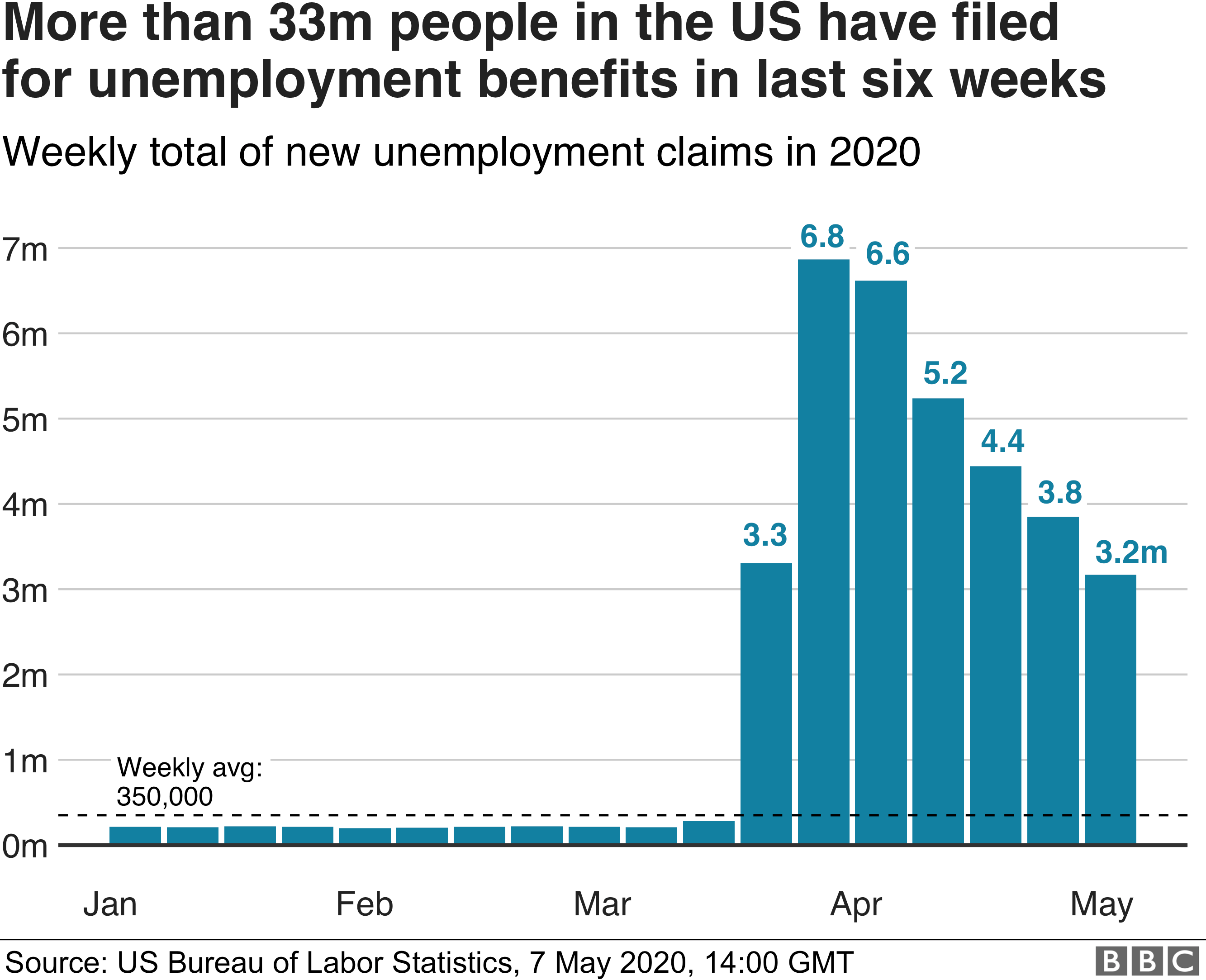
Coronavirus: US unemployment claims hit 33.3 million amid virus


Εικόνα

Although the unprecedented job losses seem to be slowing, economists say the monthly unemployment rate for April, which will be released on Friday, could reach 15% or higher.

Just two months ago, the unemployment rate was at 3.5%, a 50-year low.


:s_crazy :s_crazy

Μέσα σε 1,5 μήνα η ανεργία πήγε από το 3,5% στο 15%+. Πρωτοφανή πράγματα... :help: Κυριολεκτικά σοκ και δέος... Αυτά δεν τα είδαμε ούτε καν στο Κραχ του 1929...

Και το βάζω, γιατί ο Αμερικανός καταναλωτής παραμένει σημαντικό κομμάτι της παγκόσμιας οικονομίας. Σε συνδυασμό με το -6,8 που δήλωσε η Κίνα για το ΑΕΠ στο Q1... :help:

Θυμίζω πως το κραχ του 1929 ξεκίνησε από την Αμερική. Το ίδιο και η κρίση του 2008-2010. Οι απώλειες της οποίας για τους πολίτες δεν έχουν ξεπεραστεί.

Βέβαια, ας μην ξεχνάμε, πως την ίδια στιγμή...

a new report for the Institute for Policy Studies, the wealth of America's billionaires actually increased by nearly 10% over just three weeks as the COVID-19 crisis took hold.
.............................
Only the top 20% of US households had fully recovered the wealth they had prior to the Great Recession.
..........................................................

According to our data, the taxes paid by America's billionaires, measured as a percentage of their wealth, decreased by a stunning 79% between 1980 and 2018.
..................................................................

This time, in the $2.2 trillion stimulus that Congress passed, ordinary households got a one-time $1,200 check. People earning over $1 million, however, could receive an average tax windfall of $1.6 million, according to analysis released by two congressmen. :s_whiteflag :s_whiteflag :s_shout :s_shout


Όπως έγραψε και στον τίτλο του παραπάνω άρθρου το γνωστό όργανο του κομμουνισμού στην Αμερική CNN

Billionaires are getting even richer from the pandemic. Enough is enough


Η χυδαιότητα του συστήματος έχει ξεπεράσει κάθε αρρωστημένη φαντασία.


Σεξ και βία έρχεται από παντού. Δεν ξέρω πως θα γίνει ή τι ακριβώς θα γίνει. Ξέρω μόνο πως θα είναι άσχημο.
Άβαταρ μέλους
By markvag
#645656 Και βγήκαν και τα νούμερα για τον Απρίλιο...


The US unemployment rate has risen to 14.7%, with 20.5 million jobs lost in April, as the coronavirus pandemic devastated the economy.

The rise means the jobless rate is now worse than at any time since the Great Depression of the 1930s.


Ρεκόρ 90 ετών στην ανεργία...

Υπενθυμίζω πως οι νέοι άνεργοι συνολικά από μέσα Μαΐου είναι πάνω από 33εκ... :help:

Προσδεθείτε! :help:
Άβαταρ μέλους
By g8777
#645659
markvag έγραψε:
Προσδεθείτε! :help:


:shifty:
Άβαταρ μέλους
By dimviii
#645691 Το ποσοστό της ανεργίας στην Ιρλανδία σκαρφάλωσε στο 28,2% στα τέλη Απριλίου, συμπεριλαμβανομένων αυτών που λαμβάνουν έκτακτα επιδόματα ανεργίας λόγω του κορονοϊού, ένα ποσοστό που είναι το υψηλότερο που έχει καταγραφεί, όπως ανακοίνωσε σήμερα η στατιστική υπηρεσία της χώρας.

https://www.newsit.gr/kosmos/irlandia-o ... a/3026712/
Άβαταρ μέλους
By elteo
#645692 Kαι μιλάμε για την Ιρλανδία των 78.806$ κατα κεφαλήν ΑΕΠ. :lipsealed:

* H Ελλάδα για να έχουμε ένα μέτρο σύγκρισης έχει 20.324$.
Άβαταρ μέλους
By markvag
#645932 Εγώ το είπα:

markvag έγραψε:
Προσδεθείτε! :help:


Δεν ξέρω τι ακριβώς θα γίνει, ξέρω μόνο πως θα πονέσει όσο δεν έχει πονέσει τίποτε άλλο στην πρόσφατη ιστορία.
Άβαταρ μέλους
By dimik
#645939
markvag έγραψε:Εγώ το είπα:

markvag έγραψε:
Προσδεθείτε! :help:


Δεν ξέρω τι ακριβώς θα γίνει, ξέρω μόνο πως θα πονέσει όσο δεν έχει πονέσει τίποτε άλλο στην πρόσφατη ιστορία.


μια κρισούλα θα ειναι μωρέ
Άβαταρ μέλους
By markvag
#645982
dimik έγραψε:
μια κρισούλα θα ειναι μωρέ


Αυτό ακριβώς είπαν και το 1929. Εξ' άλλου πλέον τα χρηματιστήρια έχουν ανακάμψει, άρα όλα πόπα! :s_yes


A, και αν αναρωτιέται κάποιος πως γίνεται με τόσα τρισεκατομμύρια που έχουν πέσει παγκοσμίως στις αγορές να μην έχουμε πληθωρισμό, ας κοιτάξει τα χρηματιστήρια. Εκεί που πάνε τα τρισεκατομμύρια (μετοχές, funds, εταιρείες) υπάρχει πληθωρισμός, στον πραγματικό κόσμο (που δεν έχει δει σεντ) όχι.
Άβαταρ μέλους
By g8777
#645998 The Moment to Change the World Is Right Now


How will the coronavirus change the world? Nobody knows yet. But we do know where we were before the pandemic hit: inequality had reached historic records worldwide, Australia had burned for months on end, autocrats were suffocating democracy in Hungary and Venezuela, and a wave of protests had swept across six continents–from Beirut to Paris, from Hong Kong to Moscow.

And then came Gripoula.

The virus laid bare the world’s extraordinary inequalities and injustices. Lists of so-called vital professions were published all over the world, and surprise, positions such as “hedge-fund manager” and “tax specialist for multinationals” were not on them. Suddenly it was crystal clear who did the really important work in health care and education, in public transport, in supermarkets. The general rule seemed to be: the more vital your work, the less you are paid, the more insecure your employment and the more at risk you are in the fight against the coronavirus.

There are those who think we shouldn’t politicize the pandemic. There are also those who say we need to speak right now. Decisions about our future are being made in weeks, days, hours, the consequences of which will be felt for decades.

Let’s be clear: these are the circumstances in which history is written. In 1930s America, for example, the New Deal was conceived in the midst of the Great Depression. In the U.K. of the 1940s, the Beveridge report–the prime text of the British welfare state–was published while bombs fell on London.

And yes, it could also go the other way. After the burning of the Reichstag in 1933, Adolf Hitler was given far-reaching powers to restore the peace. The attacks of Sept. 11, 2001, were followed by the “War on Terror” and the mass surveillance of civilians by secret services.

There’s an old quote that I can’t get out of my head these past few weeks. It’s from Milton Friedman, one of the most influential economists of the 20th century. In 1982, he wrote, “Only a crisis–actual or perceived–produces real change. When that crisis occurs, the actions that are taken depend on the ideas that are lying around.”

Right now, we are in the biggest crisis since the Second World War. The economic impact of COVID-19 is greater than the impact of the Great Recession of 2008, and may be even greater than that of the Great Depression of the 1930s. And if history teaches us anything, it’s that extraordinary things are possible. Everything depends on the “ideas that are lying around.”


In 2011, “The Protester” was TIME’s Person of the Year. Since then, ideas that used to be dismissed as unreasonable or unrealistic have moved into the mainstream. Think about how a previously obscure academic like Thomas Piketty became a famous economist around the world. Think about how an unknown Asian-American businessman, Andrew Yang, galvanized millions of Americans with an idea (universal basic income) that–just a couple of years ago–was almost forgotten. And think about how a Swedish girl, Greta Thunberg, still only 17, kick-started the biggest climate-justice movement this world has ever seen.

In April, the Financial Times, the world’s leading business paper, published an article from the editorial board that showed just how much the times have changed. “Radical reforms–reversing the policy direction of the last four decades–will need to be put on the table,” the paper said. “Policies until recently considered eccentric, such as basic income and wealth taxes, will have to be in the mix.” I could hardly believe what I was reading. Was this the Financial Times (not exactly a left-wing paper) saying we need to tax the rich, increase the size of the government and give free money to everyone?

You could say: Well, this is all very interesting, but didn’t you get the memo about the socialist Jeremy Corbyn being crushed in Britain’s elections? And didn’t you hear that the “revolutionary” Bernie Sanders actually lost to the moderate Joe Biden? Haven’t social democrats been losing election after election in Europe?

True. But when we zoom out, we can see that something bigger is going on. Just look at the platform on which the “moderate” Biden is running. His tax plan is twice as radical as Hillary Clinton’s tax plan of 2016. His $1.7 trillion climate plan includes 30 times as much clean-energy commitment as Clinton’s did in 2016, and is even more ambitious than that of Sanders four years ago. And yes, Corbyn did lose the 2017 and 2019 elections in the U.K., but the Conservatives’ eventual public-service spending was closer to Labour’s plans than to their own manifesto.

Meanwhile, it’s important to remember that yesterday’s so-called radical ideas, like higher taxes on the rich or ambitious climate action, are now supported by a vast majority of people in developed countries. Last year, a survey of 22,000 people in 21 countries found that the majority think the government should tax the rich more in order to support the poor. In January, a Reuters poll found that even two-thirds of Americans believe the very rich should pay more taxes, including 53% of Republicans.

Historians have long known that a crisis can be a turning point for societies. And it’s not difficult to imagine how this crisis could lead us down a dark path. COVID-19 could be like 9/11: a terrible tragedy abused by those in power.

But if an alternative is possible, it’s because of all those protesters who have made the unthinkable thinkable. Just as America reinvented itself after the Great Depression, this crisis could lead to something better. The age of excessive individualism and competition could come to an end, and we could inaugurate a new age of solidarity and connection.

It may be hard to believe in such a revival when you turn on the television and hear about people stealing toilet paper, or armed men protesting. In moments like these, it’s tempting to conclude that most people are selfish and egotistical.

But we have to remember that the media often focus on the negative, and we need to take a look at the bigger picture. Then we’ll see that while the crisis deepened, solidarity actually bloomed. There’s been an explosion of altruism and cooperation: people singing from balconies; neighbors collecting food; volunteers sewing masks; doctors, nurses and cleaners risking their lives on the front lines.

For the past five years, I’ve studied how in the past two decades scientists from all over the world have switched from a cynical to a more hopeful view of humanity. Human beings, they say, have not evolved to fight and compete, but to make friends and work together. Our unique ability to cooperate may explain the success of our species.

In a time of extraordinary challenges, when COVID-19 seems like just the prequel to the global climate crisis, we need to assume the best in one another. As a historian, I can’t say I’m optimistic, but I am hopeful, because hope impels us to act.


Αυτα που λετε στην Δυτικη Σοβιετια . :s_howdy
Άβαταρ μέλους
By dimviii
#646586 Από το συνολικό ποσόν του περίπου 1,9 τρις ευρώ των ενισχύσεων που εγκρίθηκε από τις Βρυξέλλες, το Βερολίνο κατέχει το μερίδιο του λέοντος με 52%, ακολουθούμενο από τη Γαλλία με 17%, κι έπεται η Ιταλία με 16%.

Αλλά, εάν η Γερμανία εισφέρει 100 δισεκ. ευρώ προς ενίσχυση στις εταιρείες της και η Γαλλία μόλις 20 δισεκ., τότε «υπάρχει κίνδυνος αποκλίσεων στην εσωτερική αγορά», προειδοποίησε πρόσφατα ο Ευρωπαίος Επίτροπος για την Εσωτερική Αγορά και πρώην υπουργός Οικονομίας της Γαλλίας Τιερί Μπρετόν από τις στήλες της γερμανικής οικονομικής εφημερίδας Handelsblatt.

https://www.newsit.gr/oikonomia/orgi-to ... u/3029152/